
Finding Fontana Residents
Fontana sits inside San Bernardino County as an incorporated city. A resident lookup crosses city, county, state, and federal systems at once. The real question is not just who lives at an address. It is what kind of evidence could answer that. Parcel Access reveals a parcel and an ownership clue. The recorder can show named parties to an instrument. A voter-status tool can check a supplied person. A court docket can show a party and case status. Historical collections place a household in an earlier year. None of that alone proves where someone lives today.
Start with a known address through the assessor and GIS map. Then carry the APN and legal description into the recorder index. A known name and date range works better for the Superior Court of California. The County of San Bernardino Court Access Portal fits that approach. Family history points to census records, newspapers, Great Registers, and local reference collections. When the online trail stops, the next step may be an office counter, a mail form, or a library question. It could also be a narrowly framed California Public Records Act request.
- Start with a name, address, APN, middle initial, or useful date range. Keep the source of each clue.
- Use San Bernardino County Assessor Property Information to connect a street address to a parcel, situs, and available owner clue.
- Search the Recorder Self-Service index by party, document details, and spelling variants. Treat an index hit as a lead until the instrument is reviewed.
- Verify a supplied voter through California My Voter Status, or use the qualified voter-file request route when the purpose and requester qualify.
- For older Fontana households, ask Lewis Library, the Fontana Historical Society, or the County Historical Archives for the collection that fits the year.
Where Fontana Resident Records Live
San Bernardino County folds its assessor, recorder, and clerk duties into one office, the Assessor-Recorder-Clerk or ARC. The county seat is San Bernardino. ARC's counter is at 222 W. Hospitality Lane there. Assessor Services answers at (909) 387-8307. Recorder-Clerk Services uses (909) 387-8306. City records follow a different path entirely. Fontana City Hall keeps the council, administrative, permit, code, and municipal archive records for the city.
City Hall sits at 16860 Valencia Avenue, Fontana, CA 92335, open Monday through Thursday from 8:00 a.m. to 5:00 p.m. The City Clerk is the central route to council minutes, ordinances, resolutions, contracts, and administrative records. Fontana Police Records uses a separate channel at (909) 356-7103. Name the record series and a date range. Requests framed that way get better results than open-ended questions.
San Bernardino County ARC Recorder
222 W. Hospitality Lane
San Bernardino, CA 92415
(909) 387-8306
San Bernardino County Assessor
222 W. Hospitality Lane
San Bernardino, CA 92415
(909) 387-8307
San Bernardino County Elections
County Registrar of Voters
San Bernardino County, CA
Verify current contact details online
ARC also handles county birth, death, and marriage copies, fictitious business names, and related registrations, and its Assessor-Recorder-Clerk service directory sorts those counters and forms apart. The Superior Court holds Fontana case records. Custodian matters here. A city permit request, a court file request, a recorder copy order, and a vital-record application each carry different forms and eligibility rules.
Fontana's Current Resident Sources
A working Fontana residents directory is really a set of sources with different meanings. Property data centers on the parcel. A recorded document centers on its parties. Voter status centers on one person and stays restricted, while city staff and business records show a public role or licensed activity rather than a household roster. The table keeps those distinctions in view.
| Source | What It Can Show | Custodian | Access |
|---|---|---|---|
| Assessor Parcel Access | APN, situs, parcel facts, assessment context, available owner clue | San Bernardino ARC Assessor | Free parcel map |
| Recorder index | Grantors, grantees, document type, date, and number | San Bernardino ARC Recorder | Free index; copies by order or counter |
| Voter status | Status for a supplied voter and election information | California SOS and county Registrar | Identity inputs or qualified request |
| City staff directory | Public employee name, department, title, and contact | City of Fontana | Free online search |
| Business license | Licensed business name, type, address, and start-date search | City of Fontana | Free; self-reported data |
Each source answers a different question. The assessor helps with a parcel clue, the recorder with a transfer trail. The city staff directory works when a department contact is the known link. A business-license search can tie a person or entity to a commercial address. One anchor is never enough for a single person. That is why the Fontana resident lookup workflow keeps dates and source roles separate.
Fontana Assessor Parcel Access
Parcel Access is the bridge between a street string and a county record trail. Search for or inspect a parcel and note its APN, situs, map position, characteristics, assessment or exemption context, and any displayed ownership clue. The situs address identifies the physical parcel. The mailing address is where assessment correspondence goes. Those two may match, or they may differ because of a separate property, a post office box, an entity, or a protected field.
The county states plainly that its assessment information is not a legal ownership determination and never promises a full occupancy picture. Public owner-address bulk fields stay restricted under Government Code section 7928.205, and ARC offers no special queries. A map is therefore a parcel-by-parcel research tool, not an unrestricted list of every name in Fontana.
For a clear field-level view, the Assessor Property Information portal is the right starting point.
- Roll
- An assessment record that describes taxable property, value, and related context.
- Index
- A catalog of searchable record details, not the full deed, court file, or certificate image.
- Parcel
- A county-mapped unit identified by an APN and tied to a situs and legal description.
- Criss-cross directory
- An address-order reference that may connect a historical address with a listed household.
Fontana Address to Recorded Name
Fontana's recorder indexes documents by party and instrument, not by street, and that shapes every search. First pull an owner clue and an APN from Parcel Access. Then run that name as a grantor or grantee. A grantor transfers an interest. A grantee receives it. Before treating a hit as part of the parcel chain, weigh the document number, recording date, document title, and legal description.
The public index reaches back to 1925 per the recorder's landing page, but county house-research guidance describes online grantor and grantee work only from 1958 forward. Microfilm by decade or an office visit covers earlier years. A Fontana residents directory should preserve that discrepancy. An apparent gap in a record may simply mark the pre-1958 era. The online entry is only a catalog record. Images stay off the public page. Copies can be ordered, requested by mail, or inspected at the Hall of Records or the High Desert Government Center.
Search spelling variants, initials, reversed name order, trust or entity names, and a sensible recording-date window. A matching party is a lead. It is not proof of current ownership or residence. Legal descriptions and repeated parcel clues carry more weight than a name alone.
Fontana Voter Status Verification
California's public voter tool checks one voter. It verifies a name you already have. You supply a first name, last name, and date of birth, plus a California driver-license or ID detail or the last four digits of a Social Security number, depending on the tool. That design blocks a browse-by-street residents directory. For the matched person, it can return status, polling information, and ballot-related services.
| Field Label | Type | Required | Options / Format Notes |
|---|---|---|---|
| First Name | Text | Yes | Voter identity as registered |
| Last Name | Text | Yes | Voter identity as registered |
| Date of Birth | Date | Yes | Identity verification input |
| California Driver License or ID, or last four SSN | Identity field | Tool-dependent | Prevents open browsing |
| Search or Submit | Button | Required to run | Returns matched status and services |
Voter data is not handed out freely. Elections Code sections 2188 and 2194 govern access. Qualified requesters may seek records for electoral, governmental, scholarly, journalistic, or political purposes. The Secretary of State posts the fees. A statewide file costs $100. A single-voter request covers up to ten people at $30 each, capped at $100. Driver-license numbers, Social Security numbers, and signatures stay confidential. A Safe at Home participant may carry a substitute address. For a known person, use the California My Voter Status information. Date the result, because registration and address data change. A status check is not a block list of names on a Fontana street.
Fontana City Records and CPRA Requests
City records add civic context that county rolls lack. Fontana's City Clerk keeps council minutes, ordinances, resolutions, contracts, claims, rosters, and correspondence. The city archive offers category and date search for published documents, with PDFs where available. Development Services can hold permits, project addresses, applicants, contractors, and inspection history when the record is disclosable. Code Compliance handles address-keyed cases through its own channel.
When the known clue is a department or public employee, the city's staff directory fits, with search fields for Category, First Name, Last Name, and a Search button. A licensed activity points elsewhere. The Fontana business-license search accepts a search-by choice of address, name, or type, plus a value and an optional start-date range. The city warns that license data is self-reported.
Records not posted can still be requested. A California Public Records Act request should identify the record series and date range. No magic phrase is needed. Ten calendar days is the general clock. Under the CPRA, Government Code sections 7920.000 through 7931.000, an agency gets that time to decide whether responsive disclosable records exist. Unusual circumstances can justify a written fourteen-day extension. The agency need not create a new list or answer a question.
Fontana Court and Probate Names
Fontana cases sit in the Superior Court of California, County of San Bernardino. The Court Access Portal, or CAP, became the primary public portal in 2022. Basic case information is free. Registration unlocks name searches, minute orders, and document purchasing. A CAP result may show a case number, caption and party names, filing date, case category or status, events, hearings, and a document register. Data thins before 1998.
Use a case number when you have one. A name search demands more care. Compare county, date, case type, and linked case identifiers before linking two people who share a name. Sealed records, juvenile matters, adoptions, confidential family information, and protected material may be absent or redacted. Older files can sit off-site. The court says delivery may take up to a week. A clerk request should include names, the case number, and known filing or hearing details.
Probate adds decedent, personal representative, and heir clues. A docket is still not the whole file. When a legal conclusion matters, pair public probate information with the recorded deed or a certified copy. Federal matters go to PACER. That is the system for the Central District of California, not the county CAP search.
Fontana Vital Records and Copy Types
Birth, death, and public-marriage copies for a Fontana event come from San Bernardino ARC or the California Department of Public Health. The real hurdle is copy type, not a flat age rule. California splits informational copies from authorized certified copies. Confidential marriage copies go only to a party or a court order. Modern certificates are not an open index.
The 2026 CDPH fee schedule reads $31 for a birth certificate and $26 for a death certificate. Marriage certificates cost $19, and dissolution certificates $18. Forms VS 111, VS 112, and VS 113A collect applicant details, relationship and purpose, event facts, copy type, signature, and related names. An authorized-copy request also needs a statutory relationship declaration and a sworn statement. Mailed sworn statements are generally notarized. An informational copy carries a legend and cannot establish identity.
For genealogy, start with historical indexes, newspapers, cemetery material, FamilySearch, libraries, and archives. Request a certificate only when the event record itself is needed. Health and Safety Code sections 103525 and 103526 govern identity and eligibility for certified copies. ARC is often the more direct local route for a San Bernardino County event. CDPH supplies statewide forms and services.
Fontana Business and License Clues
Business records help separate people who share a name. It describes an entity, credential, or commercial role. The Fontana license search accepts address, name, type, and an optional start-date range. The city requires operating businesses to be licensed. Applications record business and mailing locations and owner or entity details. They also list contacts, start date, permits, property owner, and approvals. A license address is a premises or mailing clue, not a home address.
State records add a second check. California bizfile Online can show entity name or number, status, jurisdiction, and addresses. It may also show agent and filings where available. The Department of Consumer Affairs BreEZe search verifies a professional license by name or license details. Board, type, number, status, and discipline links vary by profession. A county fictitious-business-name record can tie a trade name to a filed registrant.
The official California business-entity search helps when a company name is the only clue. A date and address comparison still settles the match.
Business records support identity matching when dates, places, and names agree. The free California unclaimed-property search adds another name clue. A possible match still requires proof before a claim. Neither source is a resident roll. Confirm the person separately, and contact the named custodian when a filing needs correction.
Official records and commercial people-finder services also differ in what a result means. A named custodian verifies a field. A commercial service may join public and commercial data without showing the source trail.
| Route | Useful strength | Limit to keep in mind |
|---|---|---|
| Fontana, county, or state record | Named custodian, stated fields, date, and access rule | Coverage is narrow; protected or sealed fields stay closed |
| Commercial people-finder category | May combine many public and commercial clues in one result | May be stale, merge identities, charge for access, and lack official verification |
California professional and business indexes add affiliation evidence, not a household list.
The bizfile search screenshot reflects the state-level route for checking an entity name after a local Fontana clue. Its result still needs a date and address comparison.
Great Registers and Historical Fontana Names
Historical Fontana names sit across several record systems and place names. Before San Bernardino County formed on April 26, 1853, an older Fontana-area event may belong in Los Angeles County. The community was called Rosena until the name Fontana arrived in 1913. Incorporation came later, on June 25, 1952. Search each name era when a record seems missing.
The San Bernardino County Historical Archives are a strong starting point. Probate files run from 1853 through 1926. Great Registers cover 1866 through 1908 and can list occupation, age, height, physical description, and naturalization details. Archive material also records births and deaths from 1873 and marriages from 1853, with earlier marriages routed to Los Angeles County. Great Registers are historical election records, not a current residents directory. Their detail can still solve a same-name problem.
The San Bernardino County Historical Archives answer email at ARC-DLRecArchive@arc.sbcounty.gov. They also take calls at (909) 387-1001. Lewis Library and Technology Center, opened in 2008 at 8437 Sierra Avenue, is the local reference stop for newspapers, yearbooks, genealogy databases, and local history questions. The Fontana Historical Society and Fontana Historical Research Library are specialist follow-up points.
A.B. Miller developed about 17,000 acres. Rosena began as an agricultural and rail town. Kaiser Steel arrived after 1942 and reshaped the area. Later growth changed how addresses and communities were described. Those shifts explain why a historical name may appear under a former place label.
Postal Fontana and City Boundaries
A mailing city and an incorporated city are not the same thing. Fontana's own contractor guidance makes the point plainly. A job site can carry a Fontana postal address yet sit in unincorporated county territory. That difference changes the permit, code, business-license, and records custodian. Check the parcel in the Fontana GIS service. Compare that result with county Parcel Access before choosing which city office to contact.
A ZIP-keyed lookup deserves the same caution. Core Fontana delivery geography covers 92335, 92336, and 92337, though parts of the 91739 and 92316 ZCTAs overlap the wider area. A ZIP can orient a search. It cannot prove residency, city jurisdiction, or parcel ownership. To verify a specific mailing address, use the USPS address lookup.
Protected Fontana Addresses and Search Stops
A missing address sometimes signals a lawful protection rather than a failed search. California's Safe at Home program gives qualifying participants a substitute mailing address, mail forwarding, and confidential voter registration. It does not erase older public information. Government Code section 6209.5 lets a participant request substitute mailing details on selected deeds and change-of-ownership records, though a legal description can still point to the property itself.
Other data sits behind firm limits. The Driver's Privacy Protection Act and California law restrict DMV address data. Voter rolls are purpose-restricted. Vital records, adoption files, confidential marriages, sealed cases, utility records, delivery logs, and household-member details are not ordinary directory fields. CCPA rights cannot delete a county deed or court record, because lawfully available government information is handled separately from a private broker profile.
California's DROP program opened in January 2026. The Attorney General counted 225,000 registrations in under six weeks and over 500 brokers in scope. Those opt-out tools cover participating data brokers only. They neither replace a custodian's process nor authorize any search for a protected person.
Lawful personal use. A Fontana residents directory supports genealogy, civic review, reconnecting, property history, and personal safety. Never use it to stalk, harass, intimidate, or harm anyone. Stop when the lawful record trail ends.
County and state sources carry different limits. An absent result deserves a careful reading before another lookup begins. For a current-custody question, the San Bernardino County Sheriff's inmate locator is the right tool.
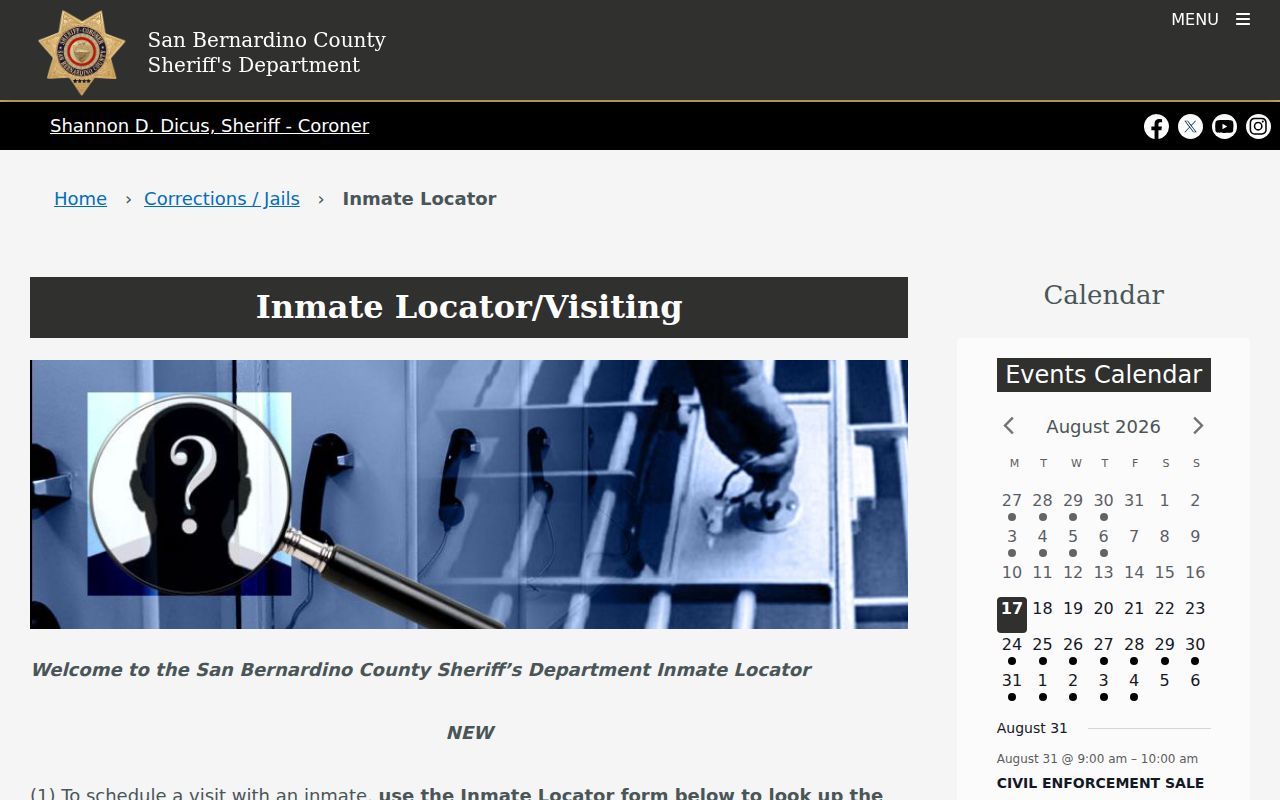
The inmate locator is a current-custody tool, separate from any directory. It shows why a specialized official lookup should serve its stated purpose rather than stand in for a general residents directory.
The official California Megan's Law search is likewise a registry tool with its own statutory fields and limits.
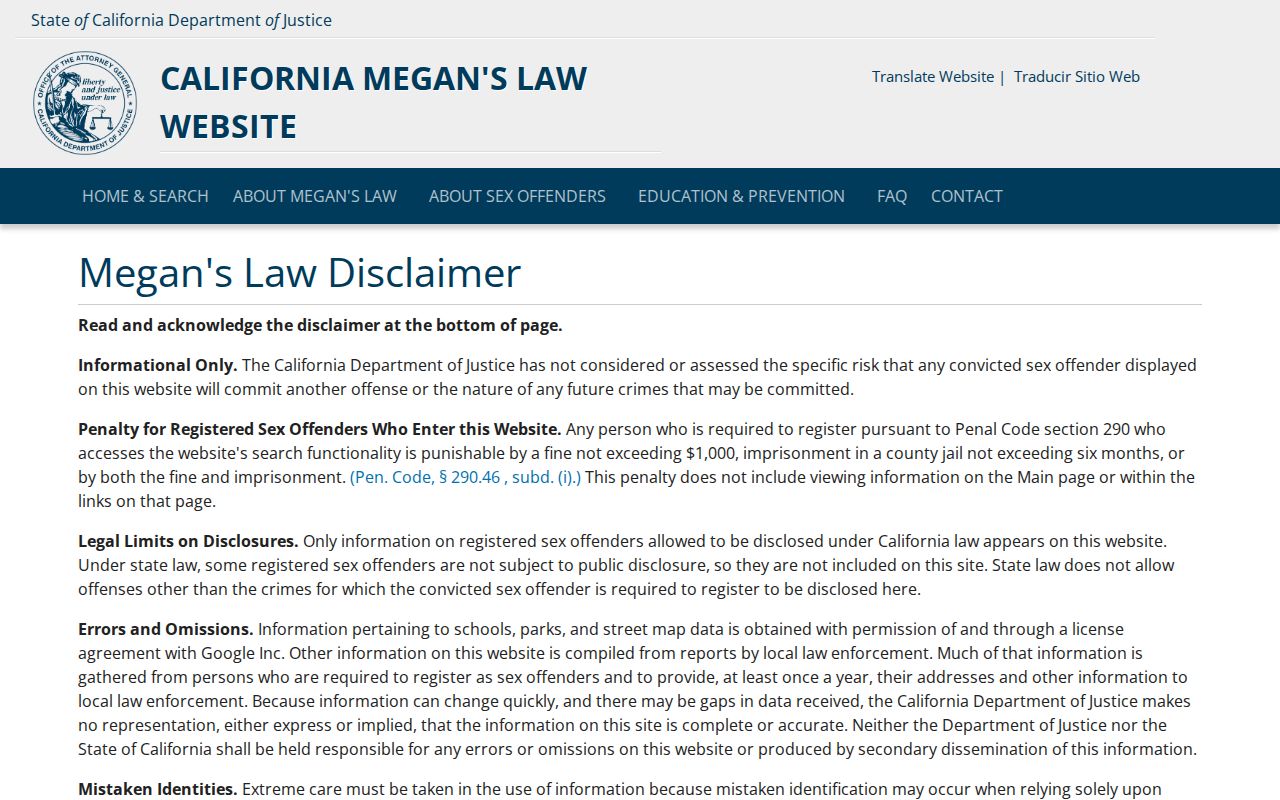
That registry search is another purpose-specific state resource. Its public fields and statutory limits never amount to a complete roster of Fontana residents.
Fontana's Historical Directory Trail
Printed city and reverse directories are gold for a past address. But no authoritative online shelf list exists for Fontana publishers, annual runs, or reverse-directory years. Ask Lewis Library and the Fontana Historical Society for the exact volume, publisher, abbreviation key, and address section. Do this before assuming any year survives. The local history collection may sit in a reference room or a licensed database. It may not be in a public web index.
Historical work pairs well. Match the 1950 census with a directory year. Then compare adjacent editions for a name, spouse, occupation, address, and owner or occupant mark. A reverse, or criss-cross, directory turns an address into a possible household entry. A missing line may mean an omitted household, a late move, a spelling variant, or a failed canvass. The full historical workflow gets its own treatment in the Fontana city directory collections discussion.
The current Fontana residents directory benefits from this older trail too. A deed may name an owner. Meanwhile a directory or census places a household at the address. Newspapers, obituaries, probate, Sanborn maps, and the County Archives can then explain a change. They do so without overstating what the record supports.
Names, addresses, and jurisdictions shift over time. Preserve the source, year, and record type behind every conclusion.